Dussehra Concludes at the Historic Podagada near Umerkote in Nabaranpur District
Dussehra Concludes at the Historic Podagada near Umerkote in Nabaranpur District
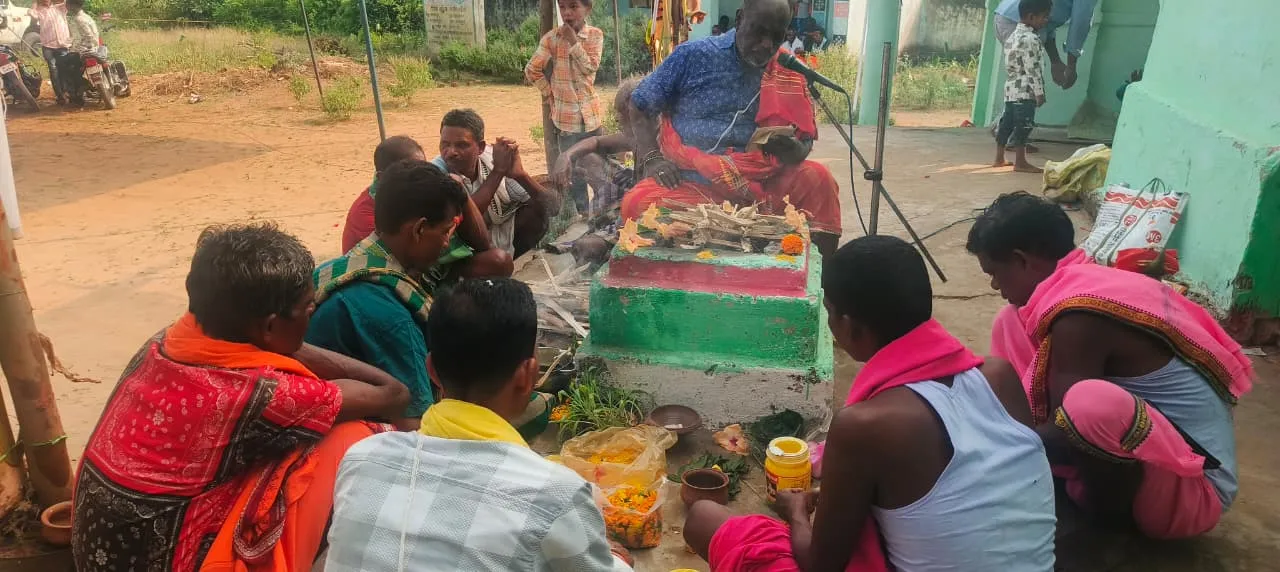
The traditional Dussehra festival has been observed at the historic Podagada site, located within the Bhandariguda Gram Panchayat of Umarkote block. On this occasion, hundreds of symbolic representations of deities—in the form of lathi (staffs), kurchi anga (ritual effigies/poles), and bimana (palanquins)—arrived from three muthas (traditional administrative/territorial units): Hirapur, Pariai, and Borigaon. Additionally, the bimana of Baba Bhairava and Ma Danteshwari—housed at the residence of Kailash Behera in Umarkote—as well as the kurchi of Khambeswari, Gadi Ma, and Bara Bhuja, also participated. These bimanas were carried by the pujari (priest) families from the village of Bada Kumari. The Dussehra celebration here follows a unique tradition; it is observed during the Krishna Paksha (waning phase of the moon) preceding the Amavasya (new moon). The rituals commence before the deity Gadi Ma—the presiding goddess (*ista devi*) of Skanda Varman, the last king of the Nala dynasty. The 'Praka Dashahara' (pre-Dashahara) rituals are observed on the Friday preceding the Amavasya (new moon). These rites take place in the presence of deities such as Gunduru Bhairava, Chutki Mauli, Butki Mauli, Jatia Rao, and Mandala Bhima. On the second day of the waxing moon (*Dwitiya Tithi*), the symbolic staffs (*lathi*) representing Bhairava, Chauria, Jatia Rao, and Ma Danteshwari are taken out, heading toward the Dashahara celebrations in Jeypore and Jagdalpur. They arrive at these destinations precisely on the day of Saptami.
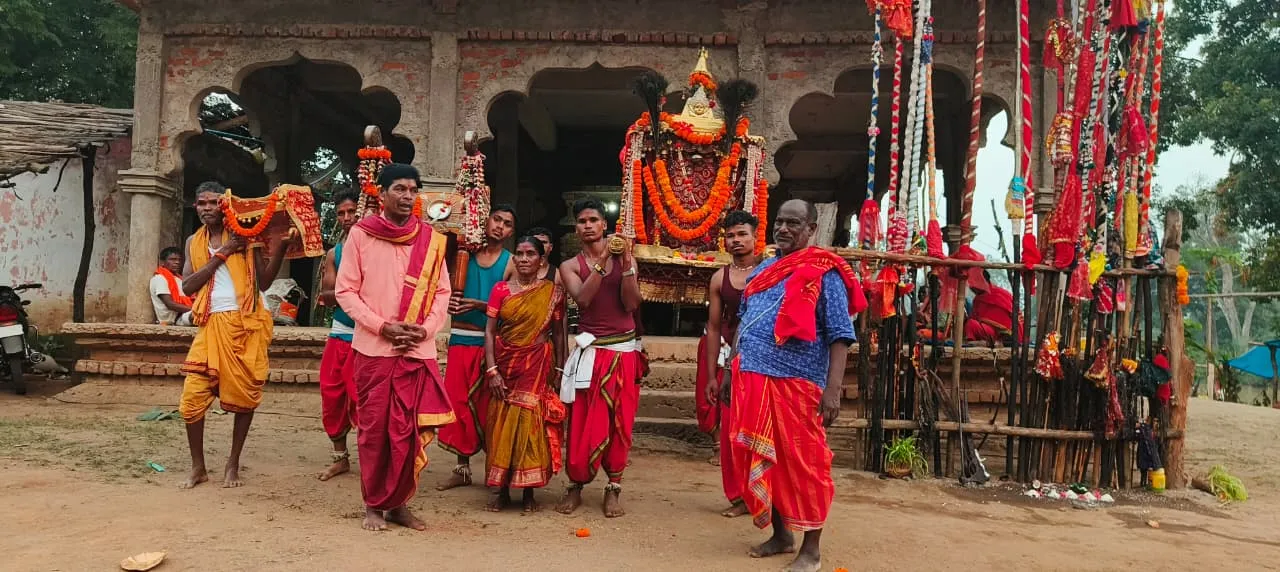
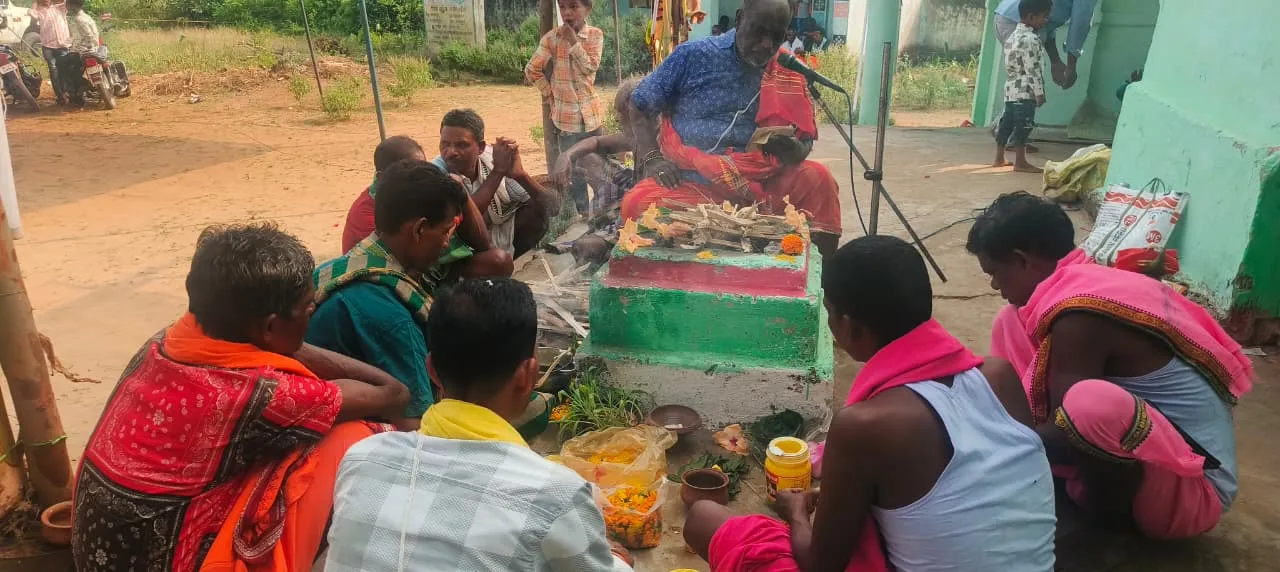
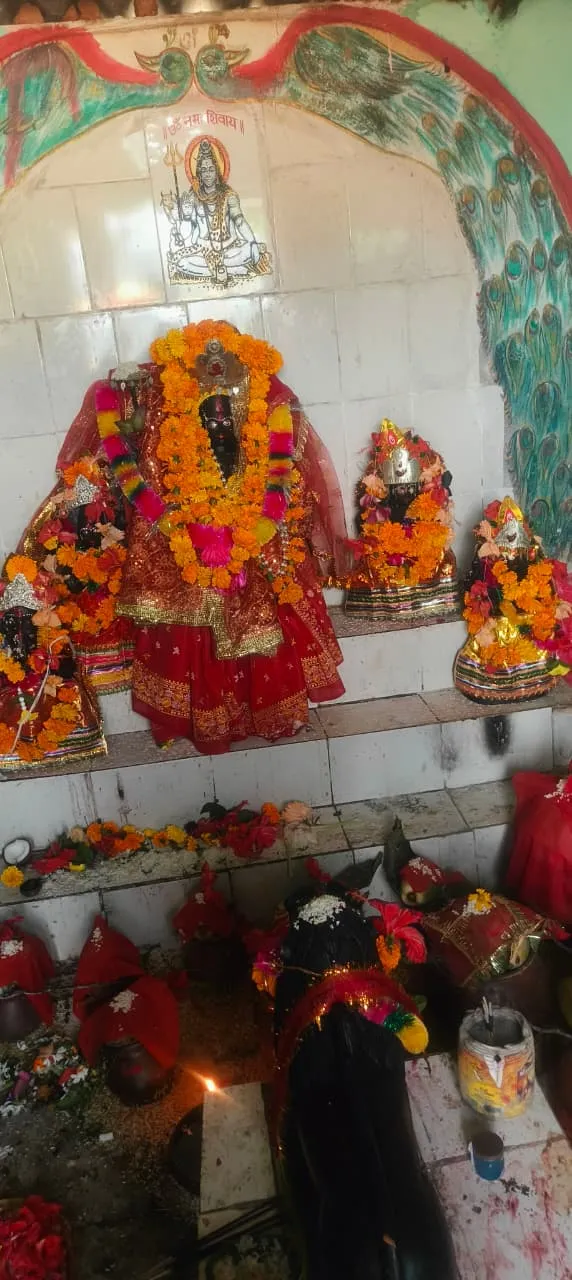
This tradition holds a history spanning two hundred years. However, the practice of traveling to the Jeypore or Jagdalpur Dashahara had been discontinued since 1942—the year of the Papadahandi firing incident. Subsequently, Kailash Behera received a divine command through the Kalisi (an oracle or medium) of Bhairava Baba and Badar Rao, instructing him to travel to Jeypore and Jagdalpur, coordinate with the government's Debottar (Endowment) Department, and make the necessary arrangements to resume the tradition of carrying these symbolic staffs. Following the command of the Kalisi (a ritual medium/oracle), Shri Behera traveled to Jeypore and Jagdalpur. He met with the Debottar (Endowment) Department, the Sub-Collector of Jeypore, and the Tehsildar to make arrangements for procuring the ceremonial lathi (staff) from Jeypore and Jagdalpur. Additionally, rice and monetary contributions were collected from the raiyats (tenants/farmers). The Pada Yatra (pilgrimage on foot) was revived in 1990, with Dr. Paresh Rath from Jeypore playing a pivotal role. Subsequently, the late Ritu Sahu took an active interest, and the Pat Khanda (ceremonial sword) of the 'Nala' kings of Podagada was presented before the Yuva Raja (Young King) of Jeypore at the Dussehra mandap in Parabeda. In line with the noble vision of Dr. Paresh Rath, all sevayats (ritual servitors) were honored with sirapa (ceremonial robes/gifts); however, this tradition was discontinued later. On the return journey from Jeypore, the procession passed through Umuri, Jayanthiri, and Borigumma. During the stay at the Bhandargharani Temple in Nabarangpur, after partaking in bhoga (ritual food offering) at the residence of Shri Gopal Krushna Bebarta, the procession travels via Taragaon to Papadahandi. From there, it proceeds through Dabugaon and Umrahandi, passing through Saraguda, to finally reach Podagad, where the Dussehra festival is celebrated. Since the onset of the COVID-19 pandemic, the lathi (ritual staff/procession) no longer travels to Podagad from Jeypore. However, during the Kalasi ritual, the lathi and bimana (palanquin) are still taken to Saura Sahi, upon the invitation of the local residents and the pujari (priest). This year, the Dussehra festival was celebrated with great grandeur at Podagad. The office-bearers of the Podagad Sebayat Charitable Trust include: President Shri Uddhab Charan Nayak, Secretary Purusottam Bhatra, Treasurer Jaladhar Majhi, Advisors Dashru Nayak, Sona Majhi, and Bharam Bisoi, along with Assistant Secretary Tulasi Bhatra. Vice President Jagadish Nayak, priests Krushna Pujari and Narayana Pujari—along with priests from all three 'Muthas' (traditional administrative/ritual units)—and Majhi (community head) Mahendra Majhi participated in the proceedings. Sri Kailash Chandra Behera oversaw the Navaratri rituals, including the 'Homa Yajna', while the worship of the 'Chausathi Yoginis' (Sixty-Four Yoginis) of Podagada was conducted by Dr. Behera. The 'Kanya Pujan' (worship of young girls) was performed beautifully as part of the Navaratri celebrations. Over a hundred women participated in the Navaratri rituals, and numerous traders set up stalls; additionally, a 'Desia Nataka' (traditional folk play) was staged during the night.
Keep Koraput Online Free & Growing
Every story, local interview, and district update is made possible through dedicated community efforts. Your contribution directly funds server costs and independent ground reporting across Southern Odisha.
Contributions of any size even small amount can make a tangible difference.